Building Communities and Backing Founders: A Conversation with Sami Abou Saab
At a Glance
Organization: Zigzag Ventures
Role: Founder & CEO
Industry: Entrepreneurship; Venture & Startup Advisory; Venture Capital
LebNet Connection: Professional Member since 2010; London Community Lead
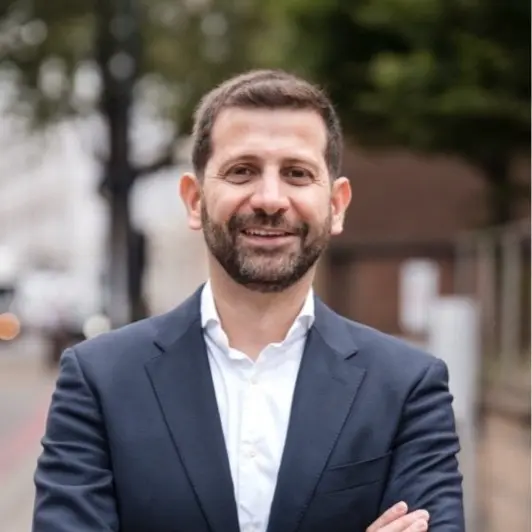 Sami Abou Saab has built a career spanning technology, product management, startup acceleration, investment, and entrepreneurship. After an MBA at UC Berkeley, his path took him fromMicrosoft/Skype to leading Speed Accelerator through to its acquisition by Seedstars, working with founders through Techstars, and eventually founding Zigzag, placing him at different stages of the startup journey.
Today, as Founder & CEO of Zigzag, Sami backs idea-stage founders and builds early-stage startup ecosystems. He has also played an important role in LebNet’s international expansion, leading the launch of the LebNet London Community, the organization’s first community outside of North America. We caught up with Sami to reflect on his career journey, the lessons he has learned from working with founders, building a Lebanese tech community in London, and the role the diaspora can play in creating opportunities and giving back to Lebanon.
From Technology to Entrepreneurship
Your career has evolved across technology, entrepreneurship, startup acceleration, and now founding Zigzag. What were some of the key turning points that shaped the path you’re on today?
Three turning points stand out. First, moving to the Bay Area in 2010 for my MBA at UC Berkeley, where I was surrounded by founders and investors and saw how startups are built. Second, Microsoft and Skype, where I learned how technology products go to market at global scale. Third, going back to Beirut in 2015 to build Speed from day one: six cohorts, 42 startups, more than 100 mentors, four exits, and ultimately Speed's own acquisition by Seedstars. I noticed the hardest moment is the beginning. That's why I founded Zigzag: to back founders at the idea stage.
Having worked closely with startups and founders at different stages, what do you believe separates a promising idea from a business that has the potential to truly succeed and scale?
A promising idea solves a problem. A scalable business solves it for many people, repeatedly, in a way that gets easier and cheaper over time. Early on, I look less at the idea and more at the founders: how fast they learn and how they handle rejection. The best treat hard feedback and failure as information, not a stop sign, and don't take no for an answer. Ideas change; many of Speed's best startups looked different a year in. What doesn't change: a real pain point, a team that executes, and the discipline to win one market before chasing five.
Opening Doors for Lebanese Founders
During your time leading Speed Accelerator, Speed supported several startups participating in LebNet Ignite, helping give Lebanese founders exposure to Silicon Valley and the global tech ecosystem. What made that opportunity important to you, and what impact did you see it have on the founders and startups that took part?
Over six cycles, Speed sent 14 of its 42 portfolio startups to LebNet Ignite, and those 14 went on to raise the most funding. Some of that is selection: we sent our strongest. But Ignite amplified them. In Silicon Valley, LebNet members coached them, challenged their assumptions and opened doors that would have taken years to reach. Synkers was later acquired by Inspired Education Group, one of our biggest exits. Oreyeon is still building and growing today. Beyond the numbers, founders came back benchmarking themselves against global companies, not local ones. That shift in ambition is what I valued most.
Building LebNet's London Community
You played a key role in establishing the LebNet London Community, LebNet’s first community outside of North America. What motivated you to help build the community in London, and what opportunities do you see for connecting Lebanese tech professionals across the UK and Europe?
In London, I kept meeting Lebanese people in tech, from founders and engineers to investors, researchers and students, and most of them didn't know each other. The talent was here; the room wasn't. With the support of George Akiki and the LebNet team, we launched on June 23, 2026 at Amazon's London office, LebNet's first community outside North America since its founding in 1999. Many attendees said it was their first time in a room filled with so much Lebanese talent, energy, and like-minded people who shared their passion for technology and innovation. . Now we're building on it with regular, hands-on sessions, and I see London as the gateway to Lebanese tech talent across Europe.
Staying Connected and Giving Back
As a long-time LebNet member, what has LebNet meant to you personally and professionally, and how has being part of the community impacted your journey? Looking ahead, what does giving back to Lebanon mean to you and what role do you believe the diaspora can play?
LebNet has been part of my journey since 2010, when I moved to the Bay Area. It gave me a community of people who understood where I came from and where I wanted to go. When I went back to Beirut to build Speed, LebNet was there from day one, with mentors, introductions and, through Ignite, a path to Silicon Valley for our startups. Now, in London, I get to help build it for others.
To me, giving back to Lebanon is less about charity and more about access: making sure a talented founder in Beirut, or a graduate in London, is one introduction away from the person who can change their trajectory. Our diaspora is one of Lebanon's greatest assets, in every major tech hub. If we stay connected and open doors for the next generation, together we can achieve far more than any one of us could alone.